
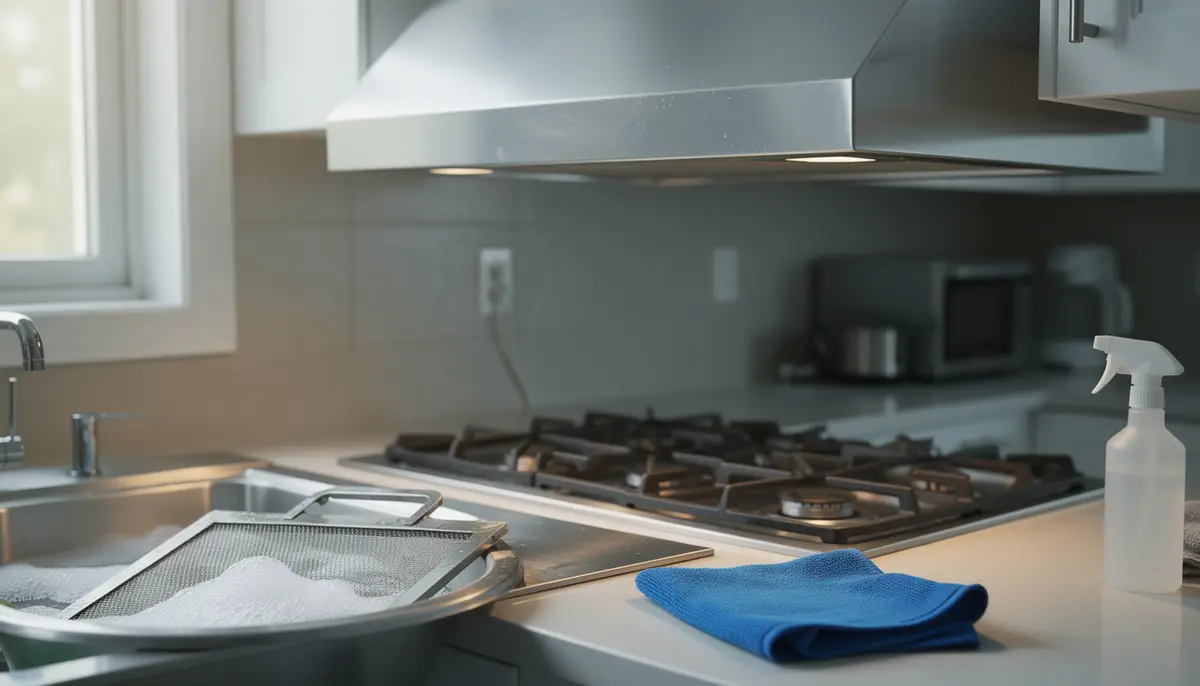
Twenty minutes of work, most of it soaking
A metal range hood filter comes clean in roughly 20 minutes of active effort: 15 to 30 minutes soaking in hot water and degreasing dish soap, a pass with a soft brush, a rinse, and a full air-dry before it clips back in. That is the whole answer to how to clean range hood filter grease, and it holds for both aluminum mesh and stainless baffle designs.
The numbers that matter are frequency and heat. Monthly cleaning keeps the job at 20 minutes; a filter left for a year turns into a two-hour project. Dishwasher heat and strongly alkaline detergents shorten the life of aluminum filters, which is why manufacturers specify short, cool cycles.
Range hood filter types, compared
Three filter types cover almost every residential hood sold in Canada, and only two of them can be cleaned. Which one you have decides how to clean range hood filter buildup, or whether you can at all.
| Filter type | Material | Found in | Dishwasher | Clean or replace |
|---|---|---|---|---|
| Mesh grease filter | Layered aluminum mesh in a frame | Most under-cabinet and slim hoods | Yes, non-phosphate detergent, short cycle | Clean monthly; replace when mesh tears or frame bends |
| Baffle grease filter | Stainless steel angled channels | Chimney, island, and pro-style hoods | Yes, upright, low heat | Clean monthly; lasts the life of the hood |
| Charcoal filter | Activated carbon in a cartridge or pad | Ductless (recirculating) hoods | Never | Replace every 3 to 6 months; cannot be washed |
Some hoods stack a charcoal filter behind a metal grease filter, so a ductless hood may carry both. Pull the grease filter and look behind it before assuming you only have one.
How often should you clean a range hood filter?
Monthly is the baseline from Broan-NuTone for a home that cooks regularly. Zephyr hoods track run time and flash a reminder every 30 operating hours, which works out to about a month for a household running the fan an hour a day.
Two Durham Region factors push that interval shorter. Ontario homes seal up for close to five months of winter, so every bit of cooking oil that the hood does not capture ends up on the ceiling and cabinet faces. And condo kitchens in Pickering and Whitby towers are often fitted with ductless hoods, where a saturated charcoal filter simply recirculates the smell.
Signs you are overdue:
- Grease beads on the underside of the hood or drips onto the stovetop
- Smoke lingers over the pan with the fan on high
- The mesh looks amber or brown instead of silver
- The fan sounds strained, as if working against resistance
How to clean range hood filter mesh by hand
Hand washing is the gentlest option for aluminum and the only option if your dishwasher cannot fit the filter flat. Do it in the sink or a large bin.
- Release the filter. Most have a spring-loaded tab or a slide latch on the frame; it drops out downward.
- Fill the sink with the hottest tap water and add a generous squirt of degreasing dish soap. Stir in a quarter cup of baking soda if the buildup is heavy.
- Submerge the filter and leave it for 15 to 30 minutes. Zephyr allows up to one to two hours for heavy grease.
- Brush both faces with a soft dish brush, working along the mesh rather than across it. Do not use steel wool or a green scouring pad.
- Rinse under hot running water until it runs clear and no suds remain.
- Shake off the water and stand the filter on a towel, or prop it in a dish rack, until it is completely dry. A damp filter reinstalled over a burner traps moisture and grease together.
The boiling-pot method (a half cup of baking soda added slowly to a pot of boiling water, filter dipped in for a few minutes) is popular online and works on moderate grease. Add the baking soda a spoonful at a time, because it foams hard, and keep the filter moving so no part sits against the pot bottom.
Can you put range hood filters in the dishwasher?
Yes for metal filters, with two conditions. Use a non-phosphate detergent, and run a short or low-heat cycle with the filter placed upright and nothing else in the machine.
Aluminum is the filter most likely to come out looking different than it went in. Dishwasher detergent is strongly alkaline, and it can darken or dull the metal after a few cycles.
Broan-NuTone says the colour change does not hurt performance, but if appearance matters (an exposed filter on a glass hood, say), hand wash instead. Stainless baffles shrug off dishwasher chemistry and usually come out looking new.
Skip the heated dry. The filter will air-dry on the counter in an hour, and the extra heat is the part of the cycle that stresses aluminum frames.
Charcoal filters cannot be cleaned, only replaced
A charcoal filter works by adsorbing odour molecules into the pores of activated carbon. Washing does not empty those pores; it just wets the cartridge and can push captured grease deeper. Broan-NuTone’s replacement interval is every three to six months, with the shorter end for households that fry often.
Some cartridges carry an indicator strip that shifts from a dotted to a solid line when the carbon is spent. If yours does not, write the install date on the frame with a marker.
Ductless hoods also depend on the metal grease filter in front of the charcoal. Keep that one clean and the charcoal lasts closer to six months than three.
Cleaning the hood exterior and underside
The exterior wipes down with a damp microfibre cloth and dish soap, followed by a dry cloth. On stainless, wipe along the grain and finish with a stainless cleaner if you want fingerprints gone; the technique is the same one in our guide to cleaning stainless steel appliances without streaks. Painted or glass hoods want soap and water only.
Underneath is the neglected part. Grease that escapes the filter condenses on the flat panel around it and on the light lenses.
With the filter out, wipe that panel with a soapy cloth, then rinse with a clean damp cloth and dry. Do not spray liquid up into the fan housing; the motor and wiring sit directly above.
If the fan blades themselves are coated, the hood may need the housing opened, which on most models is a job for an appliance technician rather than a cleaner.
Keeping the filter clean longer
Turn the hood on before the pan heats, not after the smoke appears, so the airflow is already moving when vapour starts. Cook on the back burners when you can, since they sit closer to the filter’s capture zone. And match the fan speed to the cooking: searing and frying want high, simmering wants low.
A hood that runs every time the stove does keeps grease off the ceiling, the glass stovetop, and the cabinet doors. In kitchens where the hood has been off for years, that grease has already landed everywhere, and degreasing the hood exterior, backsplash, and cabinet faces is a core part of a professional deep clean.
Pull your filter tonight and hold it up to the light. If you cannot see through the mesh, put it in the sink before you go to bed and set a monthly reminder for the next one.