
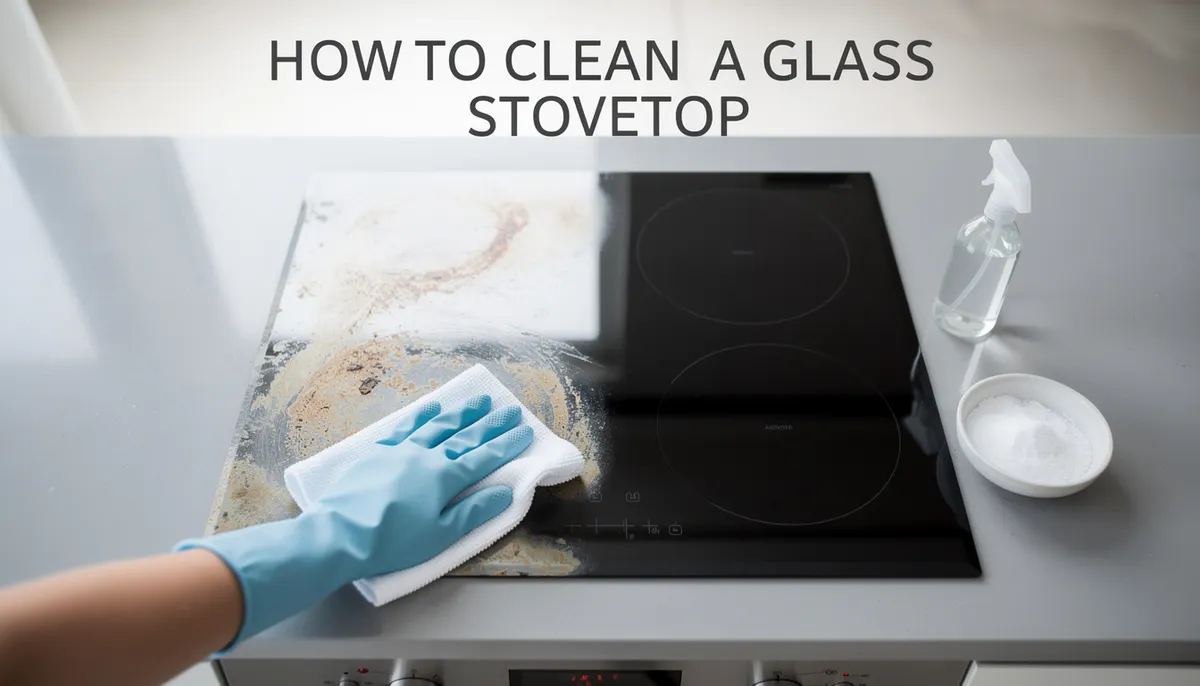
The best daily cleaning routine for a glass stovetop
Wipe the stovetop after every use while it is still slightly warm (not hot). This single habit prevents 90 percent of the stubborn stains people struggle with later. Knowing how to clean a glass stove top starts with this daily routine.
Daily routine (30 seconds):
- Wait until the surface is warm but safe to touch.
- Spray with a mix of equal parts water and white vinegar, or use a drop of dish soap on a damp cloth.
- Wipe in straight lines with a microfibre cloth.
- Buff dry with a second clean cloth to prevent streaks.
That is it. Fresh grease and food splatter come off with almost no effort when the surface is still warm. The problem only starts when residue cools, hardens, and gets reheated the next time you cook. Each heating cycle carbonizes the residue further, bonding it to the glass.
Removing burned-on stains from a glass stovetop
Burned-on food requires a two-step approach: soften the residue, then lift it off without scratching the glass.
What you need:
- Baking soda
- White vinegar or dish soap
- A razor blade scraper (single-edge, designed for glass)
- Microfibre cloths
- Spray bottle with water
Step by step:
- Make sure the stovetop is completely cool.
- Sprinkle baking soda generously over the stained area.
- Dampen a microfibre cloth with hot water and lay it over the baking soda. Let it sit for 15 minutes. The moisture and alkalinity soften the carbonized residue.
- Remove the cloth and wipe away the baking soda paste. Most light stains will come off at this stage.
- For remaining stubborn spots, hold a razor scraper at a 30-degree angle (nearly flat against the glass) and gently push under the residue. Work in one direction, not back and forth.
- Wipe the loosened debris with a damp cloth.
- Spray with vinegar and buff dry for a streak-free finish.
Important: The razor scraper must be held at a shallow angle. Steep angles risk gouging the glass. Replace the blade if it has any nicks or chips, as damaged blades scratch.
Products to avoid on glass stovetops
Glass ceramic is durable but not scratch-proof. The wrong products cause permanent damage that no amount of polishing will fix.
| Product | Why to avoid it |
|---|---|
| Steel wool or metal scouring pads | Scratches the surface permanently |
| Powdered cleansers (Comet, Ajax, Bar Keepers Friend powder) | Abrasive particles scratch glass ceramic |
| Bleach | Can discolour the surface and damage printed markings |
| Cast iron or rough-bottomed pans (dragged across surface) | Scratches and can leave metal marks |
| Ammonia-based cleaners | Can leave a film that smokes when heated |
| Magic Eraser (melamine foam) | Mildly abrasive, can dull the finish over time with repeated use |
Safe products:
- Dish soap and water
- White vinegar (diluted or straight)
- Baking soda paste (baking soda + water)
- Dedicated ceramic cooktop cleaner (Weiman, Cerama Bryte)
- Microfibre cloths
- Razor blade scraper (glass-safe, single-edge)
Preventing stains from forming
Prevention is easier than removal. These habits keep a glass stovetop looking new:
- Wipe after every use. Thirty seconds while the surface is warm prevents hours of scrubbing later.
- Use flat-bottomed cookware. Warped pans create uneven heat and cause food to splatter more.
- Lift pots, do not slide them. Dragging cookware across the surface causes scratches and can leave metal marks.
- Size your burner to your pan. A small pot on a large burner means heat escapes around the edges and carbonizes spills faster.
- Clean spills before cooking again. Reheating a dirty stovetop bakes the residue deeper into the surface.
Handling sugar spills (act fast)
Sugar is the one substance that requires immediate action on a glass stovetop. When sugar melts and cools on glass ceramic, it bonds to the surface and can actually pit the glass when you try to remove it.
If sugar spills while cooking:
- Turn off the burner immediately.
- While the sugar is still molten (and the surface is still hot), carefully scrape it off with a razor scraper. Wear an oven mitt on your non-scraping hand.
- Do not let it cool and harden on the surface.
If sugar has already hardened:
- Reheat the burner briefly (just enough to soften the sugar, not melt it fully).
- Turn off the burner and scrape immediately with a razor at a shallow angle.
- Wipe residue with a damp cloth once the surface is safe to touch.
Sugar damage is the one scenario where acting fast genuinely matters. Everything else can wait until the stovetop cools.
Restoring a dull or hazy glass stovetop
Over time, even well-maintained glass stovetops develop a slight haze from mineral deposits, micro-scratches, or product residue.
For mineral haze (white film):
- Apply undiluted white vinegar to the surface.
- Let it sit for five minutes.
- Wipe with a microfibre cloth.
- Repeat if needed.
For general dullness:
- Apply a ceramic cooktop polish (Weiman makes a good one) according to the product directions.
- Buff with a clean, dry microfibre cloth.
- This fills micro-scratches and restores shine temporarily.
For deep scratches: Unfortunately, deep scratches in glass ceramic are permanent. No product removes them. A cooktop polish can reduce their visibility, but the only true fix is replacing the glass panel (which is expensive and usually not worth it unless the damage is severe).
When the whole kitchen needs attention
A clean stovetop is one part of a well-maintained kitchen. If your backsplash, range hood, and cabinet fronts also need attention, a professional deep clean covers all of it in a single visit. Pair your stovetop maintenance with clean oven racks and a fresh dishwasher for a kitchen that looks and performs its best.