
Areas previous occupants typically neglect
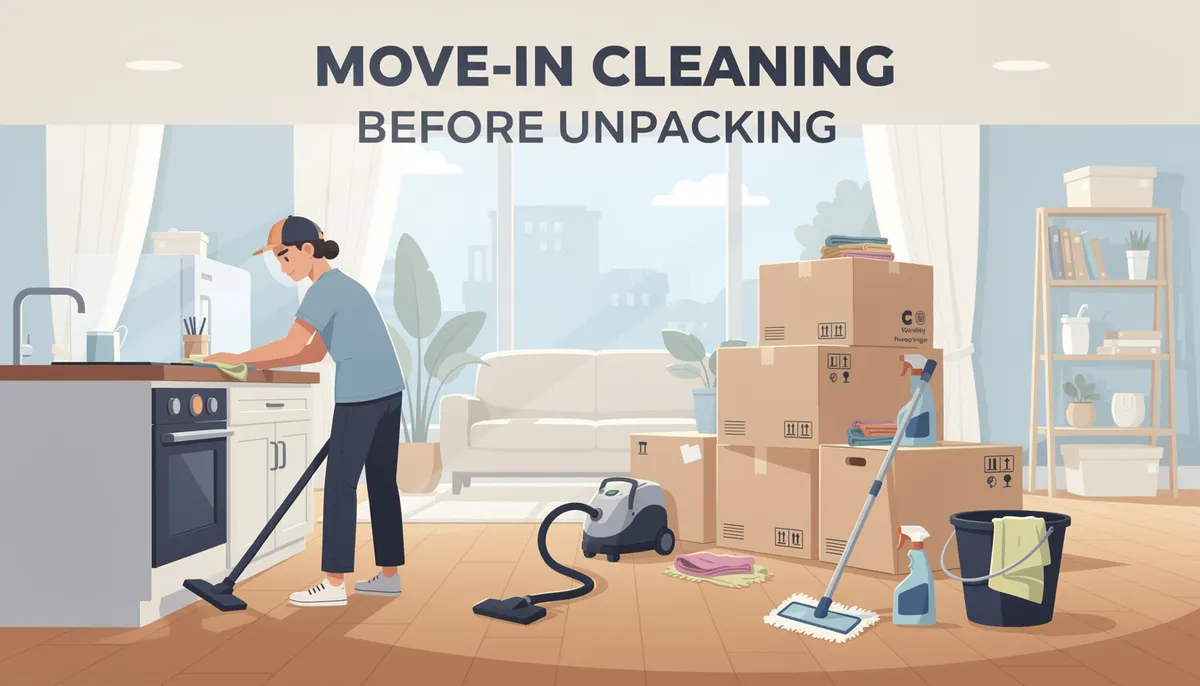
The best time for move in cleaning is after the previous occupant leaves and before your belongings arrive. The space is empty, every surface is accessible, and you can start fresh without working around boxes and furniture.
Even well-intentioned move-out cleaning tends to focus on visible surfaces. These areas are consistently left dirty:
- Inside cabinets and drawers. Crumbs, shelf liner residue, sticky spots from spills, and dust accumulate over years of use.
- Inside appliances. The oven interior, fridge shelves and drawers, dishwasher filter, and microwave ceiling are rarely cleaned thoroughly during a move-out.
- Behind and beneath appliances. The gap behind the fridge, under the stove, and behind the washer/dryer collects years of dust, food debris, and sometimes pest evidence.
- Window tracks and sills. Dead insects, dust, and condensation residue build up in tracks that are never opened.
- Closet shelves and rods. Dust, clothing lint, and sometimes mildew (in poorly ventilated closets).
- Bathroom grout. Mildew and soap scum in grout lines take dedicated scrubbing that most move-out cleans skip.
- Light fixtures and vent covers. Dust and dead insects accumulate inside globe fixtures and on vent grilles.
- Baseboards throughout. Especially behind where furniture sat, where dust bunnies collect undisturbed for years.
The complete move-in cleaning checklist
A thorough move-in clean covers the entire home, with extra attention to the areas listed above. Here is a room-by-room breakdown:
Kitchen:
- Clean inside all cabinets and drawers (wipe shelves, remove liner if damaged)
- Clean inside the oven
- Clean inside the fridge (all shelves, drawers, walls, door seals)
- Clean inside the dishwasher (filter, door seal, interior)
- Clean inside the microwave
- Pull fridge and stove forward, clean behind and beneath
- Degrease range hood and filter
- Clean countertops, backsplash, and sink
- Wipe all appliance exteriors
- Clean light fixtures
- Sweep and mop floor (including under toe kicks and in corners)
Bathrooms:
- Scrub and sanitize toilet (inside, outside, base, behind)
- Scrub shower/tub surfaces and grout
- Descale fixtures and showerhead
- Clean shower door tracks
- Clean inside vanity cabinets and drawers
- Clean mirror and medicine cabinet (inside and out)
- Clean exhaust fan cover
- Wipe baseboards
- Mop floor (including behind toilet and along edges)
Bedrooms and living areas:
- Wipe inside all closet shelves and rods
- Clean window tracks and sills
- Wipe baseboards throughout
- Dust and wipe all light fixtures
- Clean interior window glass
- Wipe light switches, outlet covers, and door handles
- Vacuum all floors (including closets and edges)
- Mop hard floors
Laundry area:
- Clean behind and beneath washer and dryer
- Wipe washer drum and door seal
- Clean lint trap housing
- Wipe shelves and counters
- Mop floor
How long does a move-in clean take?
Time depends on home size and condition. An empty home is faster to clean than a furnished one because nothing needs moving.
| Home size | Professional team (2 people) | DIY (one person) |
|---|---|---|
| 1-2 bedrooms | 2-3 hours | 4-6 hours |
| 3 bedrooms | 3-4 hours | 6-8 hours |
| 4+ bedrooms | 4-6 hours | 8-12 hours |
These estimates assume the home is in average condition. Homes that were poorly maintained or have heavy buildup (grease in the kitchen, mildew in bathrooms) take longer.
Should you clean a brand-new home?
Yes, even new construction needs cleaning before move-in. Construction leaves behind:
- Drywall dust on every surface (including inside cabinets and ductwork)
- Adhesive residue on windows, countertops, and fixtures
- Sawdust and wood shavings in closets and utility areas
- Paint overspray on hardware and fixtures
- Scuff marks from tradespeople’s boots
- Protective films on appliances that need removing
New construction cleaning (also called post-construction cleaning) is a different scope than a standard move-in clean. It requires more attention to dust removal and adhesive cleanup.
Move-in vs move-out cleaning
The scope is similar, but the motivation and focus differ:
| Move-in cleaning | Move-out cleaning | |
|---|---|---|
| Who benefits | You (the new occupant) | The landlord or buyer |
| Focus | Sanitizing for your family’s health and comfort | Meeting lease requirements or buyer expectations |
| Thoroughness | As thorough as you want | Often “good enough” to pass inspection |
| Timing | Before furniture arrives | After furniture leaves |
| Common shortcuts | None (you live with the results) | Inside cabinets, behind appliances, grout |
This is why move-in cleaning exists as a separate service. You cannot rely on the previous occupant’s move-out clean to meet your standards.
DIY vs professional move-in cleaning
Cleaning an empty home yourself is doable. The question is whether it is the best use of your time during an already stressful period.
| Factor | DIY | Professional |
|---|---|---|
| Cost | $30-$80 in supplies | $299+ (Durham Region) |
| Time | 6-12 hours (one person) | 0 hours of your time |
| Products | Consumer-grade | Commercial-grade degreasers and descalers |
| Timing | You need to be there | Team works while you handle other move-in tasks |
| Results | Good if thorough | Consistent, systematic |
Moving is already a long list of tasks. A professional move-in clean removes one of the biggest items from that list and ensures the home is genuinely clean before your first night there.
Timing your move-in clean
The ideal window is between getting the keys and the day your furniture arrives. If you are buying, this is often a few days. If you are renting, it may be the same day.
Best case: Book the cleaning for the day you get keys. Movers come the next day. You unpack into a clean home.
Same-day move: If you must move in the same day you get keys, have the cleaning team arrive first thing in the morning. They can finish a standard home in three to four hours, leaving the afternoon for your movers.
Plan ahead. Moving season in Ontario (May through September) is also peak season for cleaning services. Book your move-in clean as soon as you have a confirmed possession date.