
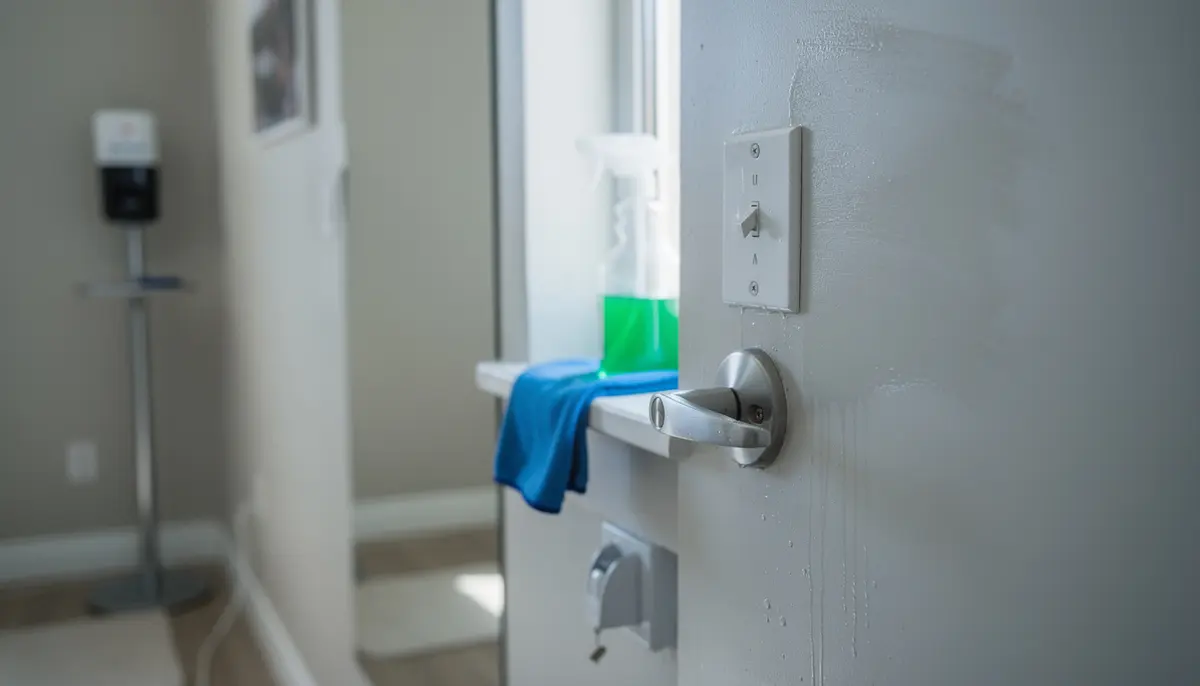
Canada declares a national flu season once more than 5 percent of influenza tests come back positive with at least 15 detections in a week, and in the 2022 to 2023 season that line was crossed in the week ending October 29. A flu season office cleaning plan that starts in mid-October is therefore not early; it is on time. The plan itself comes down to four numbers: how many surfaces are on your high-touch list, how often they get disinfected, how long the disinfectant stays wet, and how many hand sanitizer stations your floor plan needs.
When does flu season reach Durham Region offices?
Earlier than most managers plan for. The federal FluWatch program treats the season as started once the positivity threshold above is exceeded, and the exact week moves year to year; the 2022 to 2023 season crossed it in late October, and in other years detections have not peaked until late December or January.
That timing matters because an office that closes its windows for furnace season in October is also the office where a shared keyboard, a kettle handle, and a meeting room door see the same 30 hands a day. Cold weather does not create the virus; it concentrates people indoors around the same surfaces.
Cleaning and disinfecting are two different steps
Cleaning removes; disinfecting inactivates. Public Health Ontario defines cleaning as the physical removal of foreign and organic material with water, detergent, and mechanical action, and disinfection as the inactivation of disease-producing microorganisms. The first step cannot be skipped, because soil left on a surface shields what is underneath from the disinfectant.
| Aspect | Cleaning | Disinfecting |
|---|---|---|
| What it does | Removes dust, grease, fingerprints, and most microorganisms | Inactivates the microorganisms that remain |
| Product | Detergent or all-purpose cleaner and water | Product with a Health Canada DIN and a stated virucidal claim |
| Time factor | Done when the surface is visibly clean | Done when the surface has stayed wet for the full label contact time |
| Where it applies | Every surface, every visit | High-touch surfaces, washroom fixtures, kitchen contact points |
| Common failure | Wiping a disinfectant onto a dusty surface | Wiping the disinfectant dry within seconds of applying it |
Combined cleaner-disinfectant products exist and are convenient, but they still need a wet contact time, and heavy soil still needs a separate cleaning pass first.
Which office surfaces count as high-touch?
Anything a hand touches more than a few times a day. CCOHS lists light switches, door handles, control buttons, counters and tabletops, chairs, railings, payment devices, keyboards, phones, and taps; its touch point procedure adds paper towel dispensers, wheelchair access buttons, microwave and fridge handles, elevator buttons, vending machines, printers, and coffee makers.
Walk the office once and count them. Most managers are surprised by the total once every door handle (both sides), every washroom fixture, and every shared kitchen handle is on the list.
| Touch point group | Examples | Suggested flu season frequency |
|---|---|---|
| Entry and circulation | Exterior door pulls, push plates, interior door handles both sides, stair rails, elevator buttons, switches | Every cleaning visit, plus a daytime wipe by staff in busy offices |
| Washrooms | Taps, flush handles, stall latches, soap and towel dispensers, door handles | Every visit; midday in offices over 20 people |
| Kitchen | Fridge and microwave handles, kettle, coffee machine buttons, tap, cupboard pulls, table edges | Every visit; wiped by whoever spills |
| Shared equipment | Printer panels, photocopier lids, shared keyboards and mice, meeting room remotes, phone handsets | Every visit |
| Reception | Counter edge, sign-in tablet or pen, waiting chair arms, card terminal | Every visit; terminal and pen between visitors where practical |
Public Health Ontario’s health care guidance sets at least daily cleaning and disinfection for high-touch surfaces, with more frequent attention where contamination risk is higher. An office is not a hospital, but the logic transfers: the more hands per day, the shorter the interval.
What does the DIN on a disinfectant label actually mean?
An eight-digit Drug Identification Number means Health Canada reviewed the product’s formulation, label, and efficacy evidence before it went on sale. In Canada, disinfectants are regulated as drugs under the Food and Drugs Act, so a “sanitizing spray” without a DIN has not been through that review and carries no verified claim against viruses.
Three things to read on the label before flu season office cleaning starts:
- The DIN itself, printed as the letters DIN followed by eight digits, usually near the ingredient list.
- The claim. Look for a broad-spectrum virucidal claim, and for influenza A if it is listed. A product that only claims to kill bacteria is a different tool.
- The contact time for that claim, which is often different from the contact time for bacteria on the same label.
Ask your cleaning provider for the product name and DIN in writing. Both belong in the scope of work, next to the list of what gets disinfected on each visit.
How long does the surface need to stay wet?
As long as the label says, and not a second less. Contact time is the time a disinfectant must remain in contact with a surface for disinfection to occur, and for most products that means the surface stays visibly wet for the whole period.
Contact times on Canadian labels range widely, from under a minute for some ready-to-use products to around 10 minutes for others. The number is the difference between disinfecting a door handle and making it smell like lemon.
Wipes are the usual failure. The Royal College of Dental Surgeons of Ontario notes that adequate wet contact time is difficult to achieve with disinfectant wipes, and its guidance is to keep the surface wet, discard wipes that dry out, and use more than one for a large surface. A reception counter in Pickering is no different from a dental operatory in that respect.
Where should hand sanitizer stations go?
Wherever hands go between surfaces. Public Health Ontario’s hand hygiene guidance for schools and other shared settings calls for alcohol-based hand rub at 60 to 90 percent alcohol, rubbed for at least 15 seconds, with soap and water preferred when hands are visibly soiled.
Placement that gets used:
- Inside the main entrance, at the point people pause to take off a coat
- Reception counter, on the visitor side
- Kitchen entrance and beside the fridge
- Next to the printer or photocopier
- Outside each meeting room door
- Beside the time clock or coat rack if you have one
A wall dispenser gets refilled; a pump bottle walks away or empties silently. Add “check and refill sanitizer” to the daily line of the flu season office cleaning checklist, and put a bottle of moisturizer in the kitchen, because cracked hands get washed less.
What a flu season office cleaning schedule looks like on paper
It is the normal schedule with a disinfecting column added. Offices already cleaned nightly need the high-touch list disinfected on every visit; offices on two or three visits a week usually add a short daytime touch-point wipe by staff on the off days. The frequency guide for offices covers how to set the base schedule by headcount.
| Frequency | Added for flu season |
|---|---|
| Every visit | Clean, then disinfect the full high-touch list; respect contact time; refill sanitizer and soap; empty tissue bins |
| Daily, by staff | Wipe own keyboard, phone, and desk edge; kitchen handles after the lunch rush |
| Weekly | Disinfect chair arms, meeting room tables edge to edge, washroom walls at hand height |
| Mid-October, once | Confirm product DIN and contact time in writing; install or relocate sanitizer dispensers; brief staff |
| After a cluster of sick days | Extra visit for a full high-touch and washroom disinfecting pass |
A commercial cleaning schedule should list these items line by line, not as “sanitizing included.” If your provider cannot name the product, the DIN, and the contact time, the disinfecting column is not real; our guide to what a commercial cleaning service should provide covers how to ask.
The one thing to do this week
Find the disinfectant bottle in your supply closet and read the label for the DIN, the virucidal claim, and the contact time. If any of the three is missing, that is the first fix, and it costs less than a case of tissues.
Then count your touch points and send both numbers to whoever cleans your office. If that is us, or you would like it to be, we can build the disinfecting column into your schedule before the season crosses its threshold.