
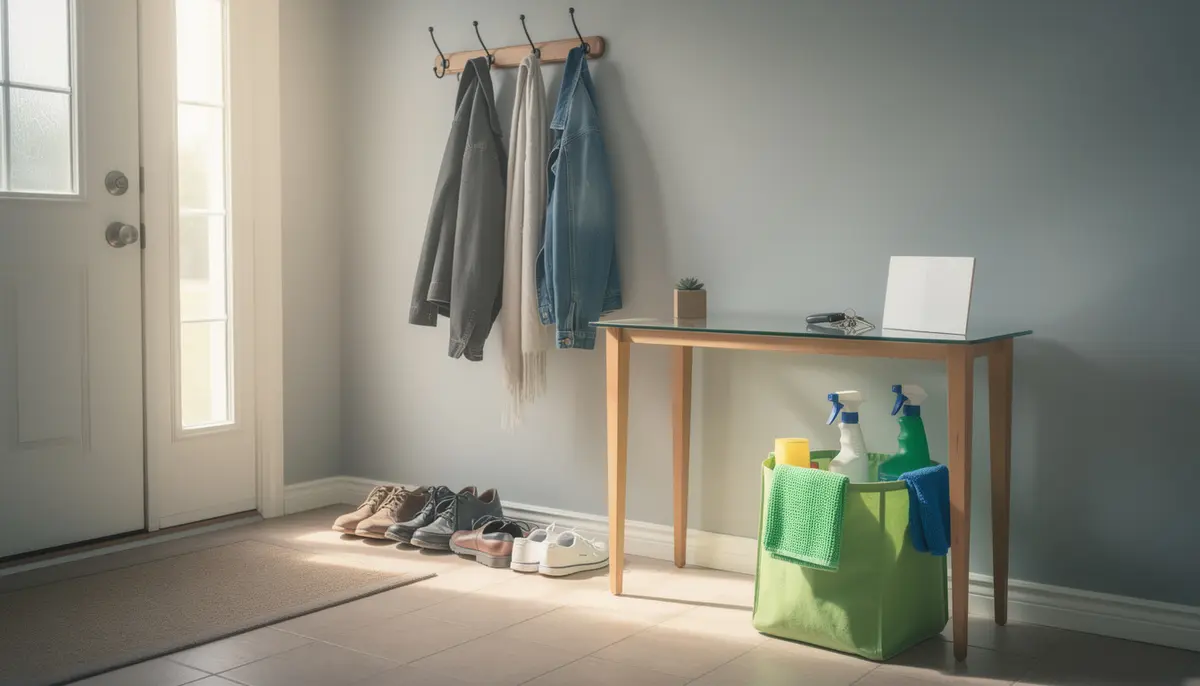
Knowing how to prepare for house cleaners comes down to one rule: clear the surfaces, skip the scrubbing. Everything else on this page is detail around that rule, because the most common mistake we see before a first visit is a client who spent two hours cleaning the night before and then apologized for the mess.
You are paying for cleaning. Your job is to remove the things that stop it from happening, and that takes about fifteen minutes.
Do not clean before the cleaners come
Pre-cleaning wastes your evening and does nothing for the result. A professional cleaner works from a checklist that covers every surface whether it looks dirty or not, so the toilet you scrubbed at 10 p.m. gets scrubbed again at 10 a.m.
There is a second problem with pre-cleaning. On a first visit, the cleaner is trying to learn your home: which rooms collect the most grime, where the hard-water scale builds, which floors need a second pass. A home that has been hurriedly wiped down hides the information they need to plan the recurring visits properly.
Tidying is different. Tidying moves your belongings out of the way; cleaning removes dirt. That split is the whole answer to how to prepare for house cleaners: one is your job, the other is theirs.
How to prepare for house cleaners the night before
Spend fifteen minutes on the four things that eat into cleaning time. One home services guide estimates that a quarter hour of tidying saves a cleaner 30 to 45 minutes of moving your things around, and our experience across Durham Region homes matches that.
- Dishes. Load the dishwasher or wash and put away what is in the sink. A full sink blocks the kitchen, which is usually the room you care about most.
- Floors. Pick up shoes, bags, toys, laundry, and dog bowls. Vacuuming around a pile is not vacuuming.
- Counters and nightstands. Stack mail, move small appliances you rarely use, and clear bathroom ledges. Cleaners wipe around objects; they do not rearrange your life.
- Laundry. Get it off the floor and off the bed. Beds get made on a standard visit, but only if the bed is reachable.
Anything beyond that list is optional. If the guest room is closed and you want it skipped, shut the door and say so.
Pets, kids, and the first visit
Put pets in a closed room, a crate, or the yard for the length of the visit. Even a friendly dog gets anxious around a vacuum and a stranger, and a curious cat will find the one open door while a cleaner carries supplies in from the car.
Tell us about pets when you book, not on the doorstep. Shedding changes how the floors are handled, and a cleaner who knows there is a cat will check for litter tracking near the box. If your pet has a room it is not allowed in, mention that too.
Kids are easier: the visit runs like any other morning. The only request is that toys are off the floor before we arrive, which is a good chore to hand to the kids themselves.
Where to put valuables and paperwork
Lock away cash, jewellery, passports, and anything irreplaceable before the first visit. This is not about trust; every cleaner we send is background-checked and we are fully insured. It is about removing any possibility of a small item being knocked into a bin or shifted during dusting and then blamed on the wrong person.
Paperwork deserves the same treatment. Bills, medical records, and work documents left on a desk can end up in a tidy stack that is not the order you left them in. A folder or a drawer solves it.
Fragile items sitting on high shelves or unstable stands should either come down or be pointed out. If Grandma’s vase is the one thing in the house that must not be touched, put it on the do-not-touch list rather than hoping for the best.
How do cleaners get in when you are not home?
Most of our recurring clients are not home for their visits. They leave a spare key in a lockbox, share a door or garage code, or arrange a concierge drop-off in Pickering and Whitby condo buildings. Your cleaner arrives at the booked time and locks up when finished.
For the first visit we recommend being there for the first ten minutes if you can. Walk your cleaner through the home, point out priorities, and show them the things that are not obvious: the sticky patio door, the bathroom fan switch, the fridge that should not be moved. That short tour is what makes the second and third visits faster.
After the first visit, we assign the same cleaner to your home whenever possible. They already know the layout, so you only need to leave a note when something changes.
Priorities, exclusions, and how to say them
Write your priorities down and leave them on the counter, or send them with your booking. Three lines are enough. “Kitchen and main bathroom first, skip the basement, please do not move the crib” tells a cleaner more than a twenty-minute conversation.
| Do this | Not this |
|---|---|
| Name the two rooms that matter most to you | Say “just do everything” and hope the order matches yours |
| List rooms or items that are off-limits | Close a door and assume it will be understood |
| Mention product sensitivities when you book | Bring it up after the bathroom has been sprayed |
| Ask about add-ons (inside the fridge or oven) ahead of time | Expect them to be included in a standard visit |
| Leave supplies you insist on using out with a note | Hide your preferred products in a cupboard |
We bring our own supplies and equipment, so you do not need to buy anything. If you prefer a specific product on a specific surface, leave it out with a note and your cleaner will use it. Anyone with scent or chemical sensitivities should mention it at booking so the right products are packed.
Add-ons are the other thing to sort out early. A standard visit covers kitchens, bathrooms, living areas, bedrooms, and floors, following the same room-by-room process as our house cleaning checklist. Inside the oven, inside the fridge, and interior windows are separate requests, and they need to be on the booking so the time is allowed for.
What a first visit with us looks like
Expect two to three hours for a typical Durham Region home, with the first appointment running slightly longer. The extra time is your cleaner learning the layout and dealing with buildup that a maintenance visit would not normally see.
If the home has gone a few months without a proper clean, tell us. A first visit sometimes makes more sense as a one-time deep clean to bring the house to a baseline, with recurring visits maintaining it from there. The comparison of deep cleaning versus regular cleaning explains which one fits a home that has drifted.
Every visit ends the same way: your cleaner works the full checklist, locks up, and you come home to a finished house. If something was missed, tell us within 24 hours and we will send someone back to re-clean that area at no charge. That guarantee is the reason you do not need to hover during the visit.
The night-before checklist
Print this, or screenshot it, and run through it the evening before your first recurring house cleaning visit. It is everything you need to know about how to prepare for house cleaners, in eight lines:
- Dishes done, sink empty
- Floors clear of shoes, toys, laundry, and pet bowls
- Counters and nightstands cleared
- Valuables and paperwork locked away
- Pet plan sorted (room, crate, or yard)
- Access sorted (key, code, or you at the door)
- Priority note on the counter with anything off-limits
- Add-ons and product preferences already on the booking
Then stop. Do not touch a sponge. The whole point of booking a cleaner is that the next morning, someone else does.