
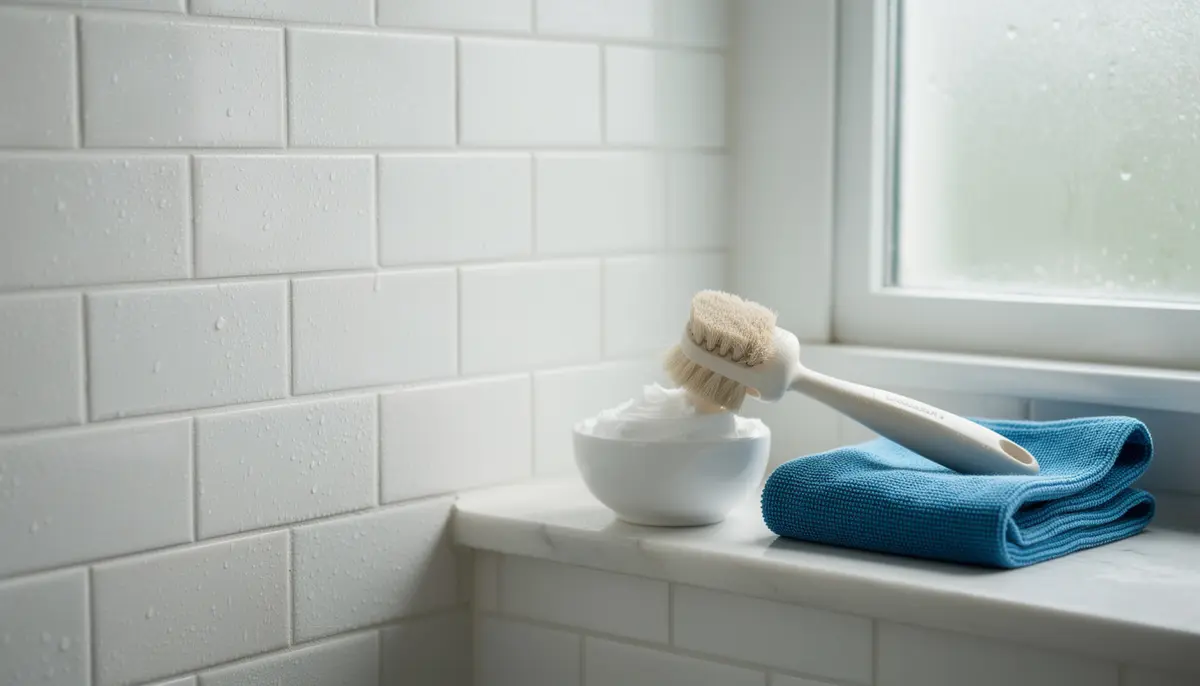
Bleach and a stiff brush is why your grout looks worse every year
Ask ten people how to clean tile and grout in shower stalls and nine will describe the same thing: spray chlorine bleach, scrub hard, rinse, repeat next month. The grout whitens for a week, then greys out faster than before. That cycle is not bad luck: chlorine bleach strips the colour from tinted grout and does nothing about the dirt sitting inside it, and hard scrubbing opens the pores so more dirt gets in.
We see the results of that cycle in bathrooms across Whitby, Ajax, and Bowmanville: pitted grout lines, tile that looks fine from the doorway and grimy up close, and homeowners convinced the grout needs replacing. It usually does not. It needs a cleaner matched to the grout, enough contact time, and a seal afterward.
Know which grout you have before you buy anything
Most shower walls have unsanded cement grout, most shower floors have sanded cement grout, and a growing number of newer builds use epoxy. Each one tolerates a different set of cleaners.
| Grout type | Where you find it | Porous? | Needs sealing? | Avoid | Safe routine cleaner |
|---|---|---|---|---|---|
| Unsanded cement | Wall tile, joints under 3 mm (1/8 inch) | Yes | Yes | Vinegar, acidic descalers, stiff wire brushes | pH-neutral or alkaline bathroom cleaner |
| Sanded cement | Floor tile, joints 3 mm and wider | Yes | Yes | Acids, harsh abrasives that pull sand out | pH-neutral or alkaline cleaner, oxygen bleach |
| Epoxy | Newer showers, commercial bathrooms | No | No | Acids, chlorine bleach, scouring pads | pH-neutral cleaner, soft brush |
A quick test: press a fingernail into a grout line. Cement grout feels slightly chalky and may leave a trace of dust, while epoxy feels smooth and almost plastic. If you tiled the shower yourself or have the leftover bag in the garage, the label settles it.
How to clean tile and grout in shower stalls, the routine version
The routine that works is tile first, grout second, and time doing most of the labour. It takes about 40 minutes per shower, most of it waiting.
- Rinse the walls with warm water to knock down loose soap film and hair.
- Spray the tile with a pH-neutral or alkaline bathroom cleaner (most “bathroom” or “tub and tile” sprays qualify; check that the label does not list an acid). Let it sit two to three minutes, wipe, rinse.
- Mix oxygen bleach powder with hot water into a loose paste and press it into the grout lines with a grout brush or an old toothbrush.
- Leave it for 30 to 60 minutes. Keep it damp with a light mist if it starts to dry out.
- Scrub the grout lines with a nylon brush using short strokes along the line, not across it.
- Rinse everything twice, then squeegee the walls and leave the door open so the grout dries fully.
Do not mix the oxygen bleach with anything else, and never combine it with chlorine bleach or an ammonia cleaner in the same session. Rinse one product fully before you introduce another.
Oxygen bleach vs chlorine bleach: which one for grout?
Oxygen bleach wins for grout in almost every home shower. It is slower, but it lifts what is in the grout instead of whitening the surface, and it does not strip colour from tinted grout or eat the cement binder.
| Factor | Oxygen bleach (sodium percarbonate) | Chlorine bleach (sodium hypochlorite) |
|---|---|---|
| How it works | Releases oxygen into the grout, lifts soil | Oxidizes on contact, whitens the surface |
| Coloured grout | Safe | Strips or blotches the colour |
| Cement grout over time | No known damage at label strength | Weakens and pits with repeated use |
| Fumes in a small bathroom | None | Strong, needs ventilation |
| Speed | 30 to 60 minutes of dwell time | Fast |
| Good for | Grey, dingy, soap-stained grout | Occasional disinfecting of a white, sealed surface |
There is a place for chlorine bleach: a diluted solution wiped on a white epoxy-grouted wall you want to disinfect. Even then, wear gloves, open a window, and rinse. It is a poor choice for the monthly grout routine and a terrible one for anything tinted.
What about the pink and black spots in the corners?
Pink slime and dark speckles on the surface of grout are routine cleaning. They come off with the same oxygen bleach paste and brush, followed by a thorough dry, and they stay off when the bathroom fan runs long enough after each shower.
The line to watch is size and depth. Public health guidance in Ontario says a homeowner can clean a small patch (one square metre or less) with detergent, gloves, and eye protection, while an area of four square metres or more calls for someone trained in mould remediation. If dark staining runs the length of the wall, comes back within days of cleaning, or sits behind the grout where the tile sounds hollow, that is a moisture problem behind the wall and no amount of scrubbing fixes it.
We clean grout surfaces as part of a deep clean, and we say so plainly: we do not do mould remediation. When a bathroom is past routine cleaning, we will tell you and point you to a remediation specialist rather than scrub over a leak.
Does sealing grout actually help?
Yes, for cement grout, and it is the step most advice on how to clean tile and grout in shower stalls leaves out. A penetrating sealer fills the pores so soap, body oil, and water stay on the surface where they rinse off, instead of soaking in and greying the grout from the inside.
- Which sealer. Use a penetrating (impregnating) sealer in showers. Membrane-forming sealers coat the surface and can trap water underneath, which is the opposite of what you want in a wet room.
- When. New grout needs at least 48 hours to cure before sealing. Existing grout should be cleaned as above and completely dry, which usually means waiting a day with the fan running.
- How often. Plan on resealing a daily-use shower about once a year. A guest bathroom can stretch to two.
- The test. Flick a few drops of water on the grout. Beads mean the seal is working. Water that darkens the grout within a minute means it is time to reseal.
Epoxy grout skips this step entirely. Sealing it does nothing and can leave a hazy film on the tile.
Habits that keep the grout clean between scrubs
Dry grout stays clean. Everything on this list is about getting water and soap off the wall before it soaks in.
- Run the exhaust fan during the shower and leave it on until the tile is dry to the touch.
- Squeegee the walls, not just the glass. Ten extra seconds.
- Switch bar soap for liquid wash. Bar soap leaves the fatty film that grout absorbs.
- Spray a pH-neutral cleaner on the lower third of the walls once a week and rinse. That is where most of the soap lands.
- Wash bath mats weekly. A damp mat against a tiled curb feeds the pink slime.
- Put grout scrubbing on the monthly line of your house cleaning checklist so it never waits a full season.
When a bathroom needs a full reset first
Grout that has gone a year or more without real attention responds better to one thorough session than to a series of light ones. A deep cleaning visit treats the grout, descales the tile and glass, and cleans the fixtures and fan cover in the same pass, which puts you back at a baseline the weekly habits can hold. If you want to run that reset yourself, the bathroom section of our room-by-room deep cleaning guide has the full order of operations.
Before you buy a single product, do the water-drop test on your grout tonight. The result tells you whether you are dealing with dirt on the surface or grout that is drinking everything you pour on it, and that decides which half of this article you need first.