
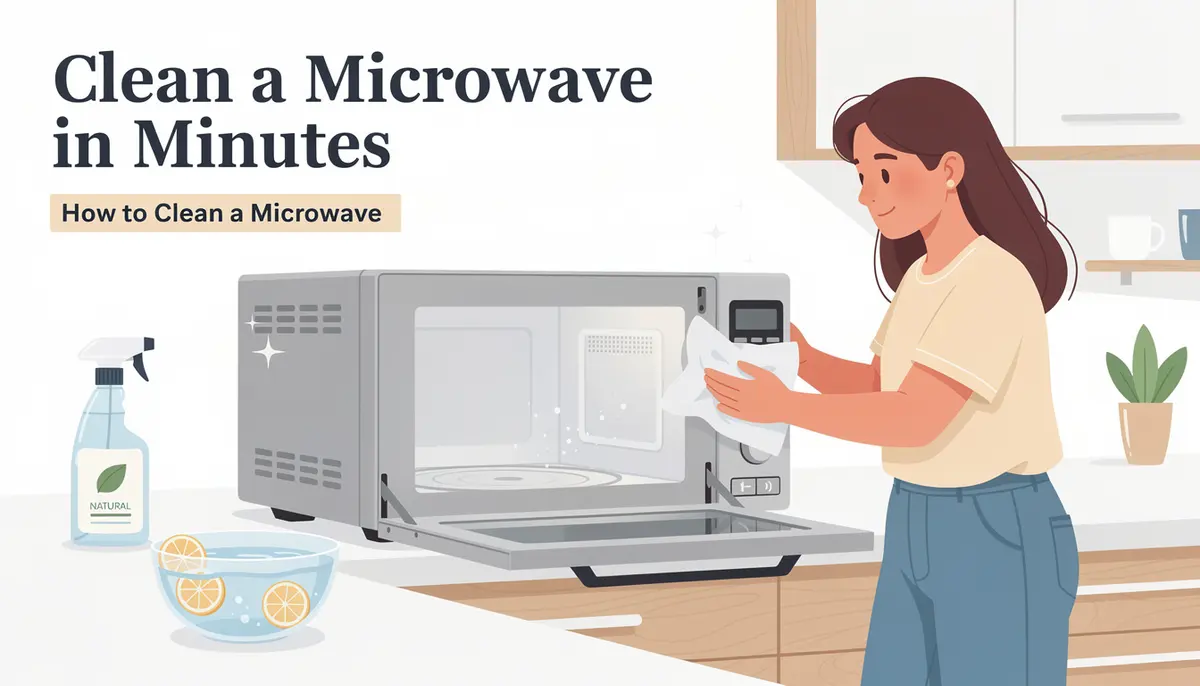
The steam method (8 minutes, no scrubbing)
The fastest way to learn how to clean a microwave is the steam method. Steam softens dried food by rehydrating it. The heat and moisture break the bond between baked-on residue and the microwave walls, turning stubborn spots into soft residue that wipes off with a cloth.
What you need:
- A microwave-safe bowl
- Water (about one cup)
- White vinegar (two tablespoons) or half a lemon
- A microfibre cloth or sponge
Step by step:
- Fill the bowl with one cup of water.
- Add two tablespoons of white vinegar or squeeze half a lemon into the water (drop the lemon half in).
- Place the bowl in the microwave.
- Run on high for three to five minutes. You want the water to boil and produce heavy steam. The window should fog up.
- Do not open the door immediately. Let it sit for two to three minutes with the door closed. The trapped steam continues working on the residue.
- Open the door carefully (the bowl will be hot, use an oven mitt).
- Remove the bowl and the turntable.
- Wipe the ceiling, walls, and floor of the microwave with a damp microfibre cloth. Everything should come off easily.
- Wash the turntable in the sink with dish soap.
- Wipe the door interior and the seal around the door frame.
- Replace the turntable.
The entire process takes about eight minutes, including the steam time. Active effort is under two minutes of wiping.
Handling stubborn stains that resist steam
Occasionally, heavily carbonized spots (usually on the ceiling directly above where food splatters) resist the first steam treatment. For these:
Baking soda paste method:
- Mix two tablespoons of baking soda with one tablespoon of water to form a thick paste.
- Apply the paste directly to the stubborn spot.
- Let it sit for five minutes.
- Wipe with a damp cloth. The mild abrasiveness of baking soda lifts the residue without scratching the interior surface.
Repeat steam method:
If the first steam cycle softened but did not fully remove the residue, run a second three-minute cycle. Two rounds of steam will handle most buildup short of actual burn damage.
What not to do:
- Do not use abrasive pads or steel wool inside a microwave. They scratch the interior coating, which can lead to rust and eventually compromise the microwave’s safety.
- Do not use oven cleaner. It is too harsh for a food-contact surface and leaves chemical residue.
- Do not scrape with metal utensils. A plastic scraper is acceptable for very stubborn spots, but steam should eliminate the need.
Cleaning the outside of a microwave
The exterior collects fingerprints, grease (especially if it sits near the stove), and dust on the top and vents.
Control panel and door:
- Spray a small amount of all-purpose cleaner onto a cloth (not directly on the microwave, to avoid liquid entering the vents or control panel).
- Wipe the door, handle, and control panel.
- For stainless steel exteriors, wipe in the direction of the grain.
- Buff dry with a clean cloth.
Top and vents:
- Wipe the top surface (this collects a surprising amount of greasy dust if the microwave is near the stove).
- Use a dry brush or vacuum attachment to clear dust from the ventilation grilles.
- Blocked vents reduce airflow and can cause the microwave to overheat.
Preventing microwave messes
Prevention takes less effort than cleaning. Three habits that keep the interior clean between deep cleans:
-
Cover food before heating. A microwave-safe lid, plate, or damp paper towel over the bowl catches 95 percent of splatters. This single habit eliminates most microwave mess.
-
Wipe splatters immediately. A quick swipe with a damp paper towel after a splatter takes five seconds. The same splatter left for a week takes five minutes and a steam cycle.
-
Use lower power for longer. High power causes food to bubble and pop aggressively. Medium power for slightly longer heats food more evenly with less splattering.
Dealing with microwave odours
Microwaves trap odours from strong-smelling foods (fish, popcorn, curry). The steam method helps, but for persistent smells:
| Method | How it works | Time required |
|---|---|---|
| Baking soda | Open box or bowl inside overnight, absorbs odour molecules | 8-12 hours |
| Coffee grounds | Bowl of dry grounds inside overnight, absorbs and neutralizes | 8-12 hours |
| Vanilla extract | Add to steam bowl and run cycle, replaces trapped odour | 8 minutes |
| Activated charcoal | Small bag inside overnight, strongest absorbent | 12-24 hours |
| Lemon steam cycle | Standard steam method with lemon, freshens while cleaning | 8 minutes |
For the passive methods (baking soda, coffee, charcoal), leave the microwave unplugged or with the door propped slightly open overnight.
Quick-reference cleaning schedule
| Task | Frequency | Time required |
|---|---|---|
| Wipe fresh splatters | After each use | 5-10 seconds |
| Full steam clean (interior) | Weekly (daily users) or biweekly | 8 minutes |
| Wipe exterior and control panel | Weekly | 1 minute |
| Clean vents and top | Monthly | 2 minutes |
| Odour treatment (if needed) | As needed | Overnight (passive) |
Part of a bigger kitchen routine
A clean microwave is one piece of kitchen maintenance. If you are working through your kitchen appliances, you might also tackle your oven racks or dishwasher.
For a full kitchen reset that covers all appliances and surfaces in one visit, a professional deep clean handles everything at once. No more working through appliances one weekend at a time.