
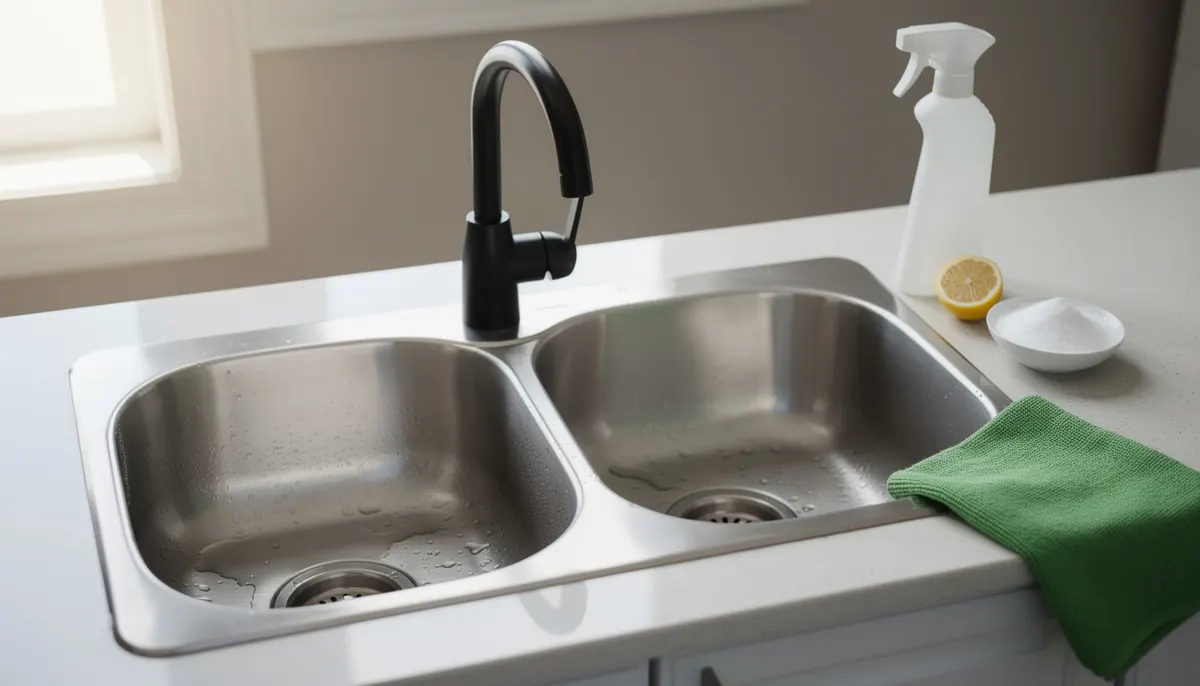
The routine that keeps a sink clean in under a minute a day
Rinse the basin, run a soapy cloth around it, and wipe it dry after the last dishes are done. That single habit is most of how to clean a kitchen sink, because nearly every stain I get called about (rust rings, chalky spots, grey film on composite) forms in water that was left to sit overnight.
Durham Region makes drying non-negotiable. Lake Ontario water supplied to Pickering, Ajax, Whitby, Oshawa, and Bowmanville carries about 125 mg/L of hardness, enough that a puddle around the drain evaporates into a white mineral ring within a day or two.
Here is the schedule I follow in my own kitchen and recommend to clients:
- Nightly (60 seconds): rinse, wipe with dish soap on a soft cloth, dry with a towel.
- Weekly (5 minutes): sprinkle baking soda over the wet basin, scrub with the soft side of a sponge, rinse, dry. Clean the strainer basket and the underside of the faucet.
- Monthly (10 minutes): flush the drain with hot water and a dose of enzyme cleaner, wipe the drain flange, and check the caulk line where the sink meets the counter.
Stainless steel: the material that hates bleach
Dish soap, warm water, and a wipe in the direction of the brushed grain handle daily cleaning on stainless. For water spots, a cloth dampened with diluted white vinegar (equal parts water) lifts the minerals in a minute or two; rinse and dry right after, because acids left standing are what pit the surface.
The orange spots people call rust are almost never the sink itself. Kohler’s guidance is clear that they come from iron particles (a cast-iron pan, steel wool, a wet can) or from chloride, meaning bleach.
Bleach sprayed on the counter drifts into the basin, and open bottles under the sink release fumes that corrode the steel from below. Rinse the sink after cleaning the counters, and keep the cabinet under it free of open chemical containers.
Rubber mats belong in the recycling bin, not the sink. They hold soap and mineral deposits against the steel and leave a permanent shadow.
Composite and granite sinks: no straight bleach, ever
Composite (quartz or granite dust bound in acrylic resin) needs dish soap on the soft side of a sponge, worked in small circles, then rinsed and towel-dried. That is the manufacturer routine from Blanco for its Silgranit line, and it is enough for daily use.
The grey or white haze that shows up on dark composite is limescale, and our hard water builds it fast. A weekly wipe with a limescale cleaner made for composite, or a cloth dampened with diluted vinegar left no longer than a couple of minutes, keeps it off. Rinse thoroughly.
For a tea or tomato stain that soap will not shift, Blanco allows bleach diluted with an equal amount of water, applied on a sponge and rinsed off promptly. Straight bleach, abrasive powders, ammonia, and steel wool all strip the protective surface layer, and the sink then stains faster than before.
Porcelain and enamelled cast iron: protect the glaze
A non-abrasive cream cleaner on a soft cloth, followed by a rinse and a dry buff, is the whole method for an enamelled sink. Kohler makes one for its own cast iron and lists a few household gel cleaners as acceptable. What the enamel cannot take is a scouring pad, a wire brush, or a powdered cleanser, all of which leave micro-scratches that turn grey with time.
Grey pencil-like streaks in the bowl are metal deposits from pots, not damage to the glaze. They rub off with a dab of the cream cleaner on a cloth or a wine cork. Chips at the rim are a different story: once water reaches the iron beneath, it rusts, so keep the drain area dry and consider an enamel repair kit early.
How to clean a kitchen sink by material, at a glance
| Material | Weekly cleaner | Never use | Hard-water fix |
|---|---|---|---|
| Stainless steel | Dish soap, baking soda, wipe with grain | Bleach, ammonia, acids left standing, steel wool | Diluted vinegar for 1 to 2 minutes, rinse, dry |
| Composite or granite | Dish soap on soft sponge, circular motion | Straight bleach, abrasive powders, ammonia | Composite limescale cleaner weekly, dry after use |
| Porcelain or enamel | Non-abrasive cream cleaner, soft cloth | Scouring pads, wire brushes, powdered cleansers | Cream cleaner, rinse, buff dry |
How do you get rid of drain odour without harsh chemicals?
Smells come from the pipe walls and the P-trap, not the bowl, which is why advice on how to clean a kitchen sink that stops at the basin never fixes the odour. Grease and food film cling to the inside of the drain, and bacteria feed on them; the fix is to remove the film, not to perfume it.
A cup of baking soda followed by a cup of vinegar, covered for ten minutes and flushed with hot water, is the classic odour fix, and it does freshen the drain. Be clear about its limits: the fizz is the two neutralizing each other into carbon dioxide and water, and once it settles there is little left doing any work. It will not dissolve a grease plug.
What works for maintenance is heat plus biology. Run the hottest tap water for a full minute once a week to keep fats moving, and pour an enzyme or bacterial drain treatment down the sink monthly before bed so it can digest the film overnight. Skip kettle-boiling water on a regular basis: PVC drain lines soften at around 60 C and repeated boiling flushes can loosen joints.
What clears a slow drain before you reach for a chemical?
A sink that drains slowly has a partial blockage in the strainer, the tailpiece, or the trap. Work from the top down.
- Lift the strainer basket and clear it. Half the slow drains I see stop here.
- Fill the basin a few inches, seal the overflow or second bowl with a wet cloth, and plunge with a cup plunger for 20 seconds.
- If it is still sluggish, put a bucket under the P-trap, unscrew the slip nuts by hand, and empty the trap. This is a ten-minute job and no tools beyond a bucket.
- Follow up with the enzyme treatment overnight.
Chemical drain openers are the last resort and, in my view, not worth it in a kitchen. They generate heat, the lye splashes back onto composite and enamel, and Kohler and the laminate makers both list drain cleaner among the products that permanently mark their surfaces.
What never to mix at the sink
The cupboard under the sink is where dangerous combinations happen, usually by accident when someone tries a second product because the first one did not work.
| Combination | What it produces | Where it happens |
|---|---|---|
| Bleach + vinegar | Chlorine gas | Vinegar descale followed by a bleach wipe |
| Bleach + ammonia (many glass sprays) | Chloramine vapour | Glass cleaner on the faucet, bleach in the basin |
| Bleach + drain cleaner | Heat, splatter, toxic fumes | A second product poured on a slow drain |
| Two different drain openers | Violent reaction, pipe damage | Acid opener after an alkaline one failed |
Health Canada’s standing advice is that bleach never gets mixed with anything, and that includes the residue of a product used minutes earlier. Rinse the basin between products, every time.
Garburator basics
Cold water, not hot, is the rule for a garburator. InSinkErator’s guidance is to run a medium stream of cold water before, during, and after grinding so fats stay solid enough to chop and flush rather than melting and coating the pipe further down.
To freshen a smelly unit, drop in a handful of ice cubes and a few lemon or lime wedges and run it with cold water. The ice knocks residue off the grinding chamber walls and the citrus oil deals with the odour. Fats, oils, chemical cleaners, and stringy or starchy waste stay out; they are the source of most jams and most calls to a plumber.
Recurring visits keep this whole routine from slipping. Our recurring house cleaning includes the kitchen sink every visit, and the descaling and degreasing that hard water and cooking leave behind is part of a deep clean. A clean sink also depends on what feeds it, so read our guide on how to clean a dishwasher if the drain smell persists after the basin itself is clean.
Start with the strainer. Pull it and clear it, put an enzyme drain treatment on the shopping list, and dry the basin after the last dish from now on. Those three things fix the majority of sink complaints before they start.